

In August 2025, Ken Read came to Korčula to train with the “V” racing program, this time aboard the Wallyrocket 51.
Anyone who’s followed sailing for the last three decades knows his name—whether through the America’s Cup, the Volvo Ocean Race, or the business side of the sport, where he leads one of the biggest names in sailmaking.
Read first appeared in the America’s Cup as coach of Young America in 1995, then returned as helmsman twice (2000 and 2003) in campaigns led by Dennis Conner. After the Cup, his career pivoted toward offshore racing: he joined Ericsson Racing Team for the second half of the 2005–06 Volvo Ocean Race, and later ran his own round-the-world programs under Puma’s sponsorship (2008-09 and 2011-12).
He eventually came back to the America’s Cup in a different role - TV commentator - and became one of the most recognizable voices in the sport, a position he has held continuously since 2013.
On the business side, his North Sails story began in the 1990s. He became President of North Sails in 2012, and in 2021 took on the role of President of North Sails Technology Group, a collection of companies spanning multiple areas of high-performance sailing, including North Sails, Quantum Sails, Doyle Sails, North Kiteboarding, North Sails Apparel, Southern Spars, Mystic Boarding, North Windships, Hall Spars, Future Fibers, North Windsurfing, Yacht Scoring and RigPro.
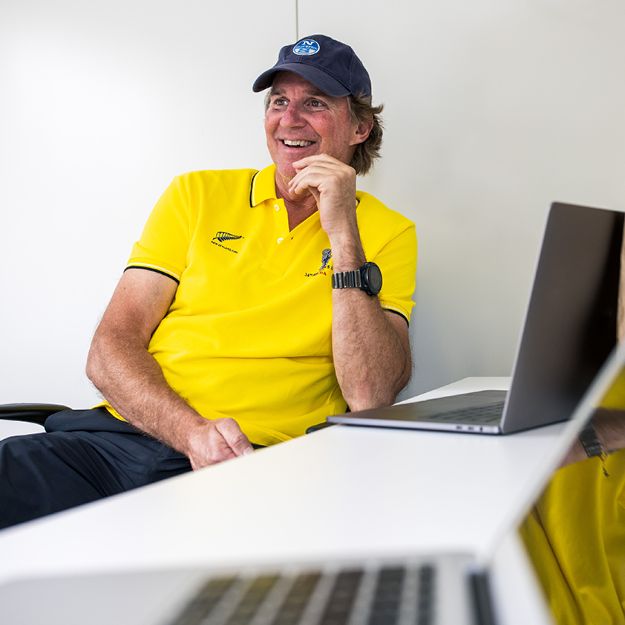
Photo: North Sails
We spoke at ACI Marina Korčula after a training session in around 20 knots of Maestral in the channel between Pelješac and Korčula. The conversation was easy and relaxed—and I have to say, Ken comes across as genuinely inspiring. Two hours disappeared in no time.
What have you done in sailing that you never thought you’d do?
Sail around the world. Through my entire America’s Cup phase - right up into the early 2000s - I never imagined I’d do that.
Then I got a call in 2003–04. Ericsson Racing Team was in trouble: John Kostecki had stepped aside, a few trimmers had left, the navigator had been fired… and I got a phone call asking if I’d come to Baltimore and think about sailing a few legs, including the Atlantic crossing.
Honestly, at that point I was burned out on the upwind/downwind grind, burned out on Cup politics. I said yes - and ended up doing five legs.
Even before I’d sailed those legs, the whole concept completely grabbed me. I was in.
So the idea that I’d end up sailing around the world two and a half times… it’s still kind of unbelievable.
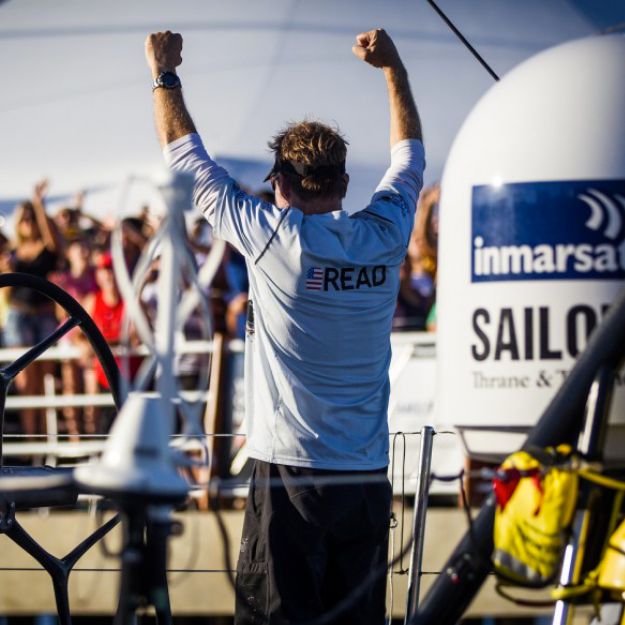
Photo: North Sails
If not sailing - could you have gone into another sport?
Definitely: ice hockey. My dad was a good hockey player, and my mom was a serious athlete too - field hockey, basketball, tennis.
My dad played Division One hockey for Brown University. I still remember getting my first skates.
My brother Brad and I played hockey all winter - starting around September 15 and going right through until June, when the sailing program kicked in. Seven days a week. It was always hockey or sailing.
At Boston University I tried to keep both going, but it became obvious I’d have to choose. Boston had the strongest hockey program in the state at the time, and the hockey coach gave me the best advice I’ve ever received: “If you train 365 days a year, you might make the team by your junior year. If I were you, I’d sail - I’ve heard you’re a good sailor.”
That was it. Hockey ended, and sailing became my life.
When did top-level sailing really start for you?
As a junior I raced around Newport and Narragansett Bay and won a lot locally - Sunfish, 420 - but I never traveled. I read about sailors from Florida, California… but I hadn’t lined up against them.
College changed that. I finally got to race those guys - and realized I could compete with them, and even beat them. That’s when everything started to lift.
That’s one of the best things about U.S. college sailing: the level is genuinely high.
You stayed in small classes into your twenties, then moved up. How did that happen?
Those were the early days of professional sailing. There weren’t many true pros.
If you wanted to stay in the sport after college, you usually got a job in a sail loft, a boatyard, or a spar shop. In Australia and New Zealand you could go to sailmaking school - America didn’t really have that.
I got hired at Shore Sails right after college. My first summer, I was literally making sails. They also gave me boats to sail - Lightning, Snipe, J24, later a J22 - and told me: “Go develop new sails and win.”
That’s where I learned sail development - and I started winning. That launched my international career in the J24 class.
I say this to kids all the time: win first, and the next opportunities come to you. If you try to force your way into the next level, it usually doesn’t happen. Have fun, keep improving, win - then the invitations show up. The right people find you.
After that it was mid-size boats, then offshore/inshore, Admiral’s Cup… and suddenly Dennis Conner is on the phone asking if I want to join his America’s Cup program.
Do you spend much time with young sailors - camps, clubs, talks?
All the time. I’ve spoken at yacht clubs and companies all over the U.S. - mostly because I genuinely enjoy talking about the sport.
Some stories are crazy enough that people aren’t sure whether I’m brilliant or insane. But I love talking to kids.
My brother Brad runs Sail Newport, the biggest training center in the U.S. Northeast. It’s basically a public sailing hub - up to a thousand kids go through it in summer.
And whenever I’m at a regatta and a local club asks if I’ll talk to their junior group, the answer is always yes.
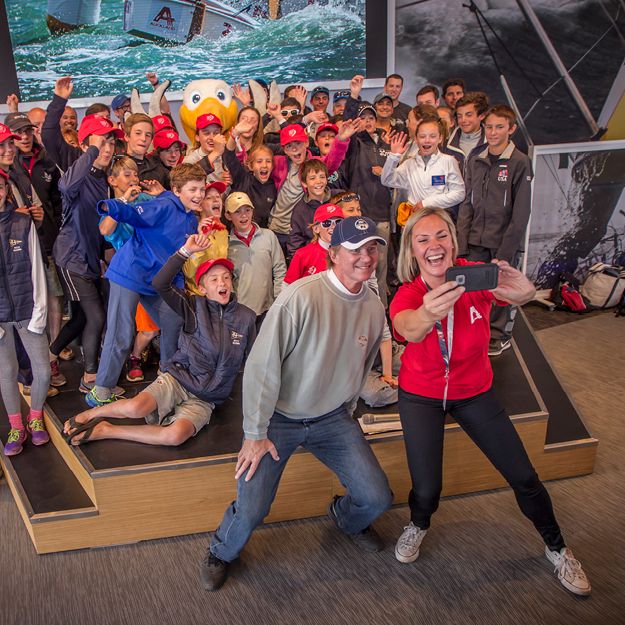
Photo: North Sails
Did you ever want to run your own America’s Cup campaign?
When I was in the Cup, campaigns were often built around one person - who led the program and sailed. That era is basically over.
Dennis Conner was one of those central figures - he ran multiple campaigns.
Then Team New Zealand changed the model in the 1990s. They built a culture of getting better every day. Sailors became part of the design process. Russell Coutts wasn’t running those early programs - Peter Blake was.
By the time I was in that world (2002–03), raising U.S. money - $700–800 million - was incredibly difficult. I was focused on driving and winning. Running a campaign wasn’t something I was thinking about.
America’s Cup or offshore - what’s your pick?
The 2000 America’s Cup was incredible. None of us expected to perform the way we did. We were a bunch of mismatched kids Dennis had pulled into shape. Smallest budget, and we nearly made the final. We were close.
In 2003 we regrouped and raised money, but it didn’t click. We weren’t fast enough - and we sank the boat in training. The rudder tore out, made a huge hole, and in four minutes the boat was on the bottom. Everything that went right in 2000 went wrong in 2003.
That same year I won the Etchells Worlds after putting in a massive effort. But I was exhausted by the rhythm of upwind/downwind. I needed a change.
Then the Ericsson call came - would I do a couple of legs? I said yes immediately. They originally thought two legs, and I told them I could do the rest too. They were surprised. I was hooked.
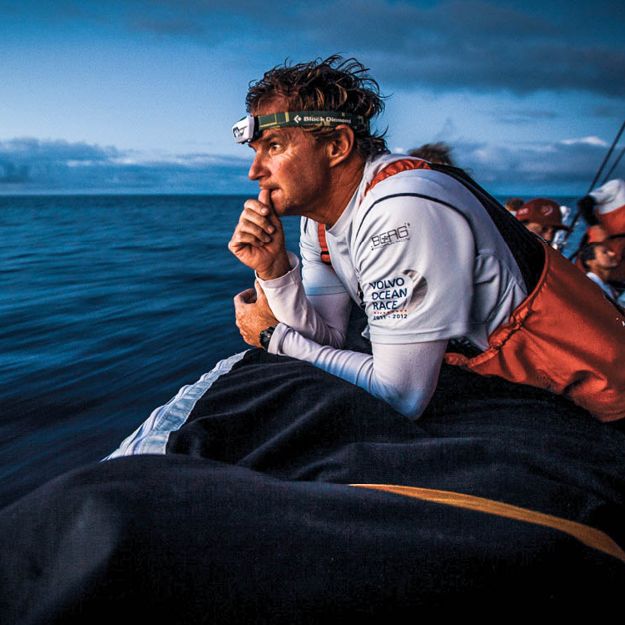
Photo: North Sails
While we're on the subject, I think the following question is also interesting: Is it easier to raise money for the America's Cup campaign, or for the Volvo Ocean Race campaign?
Volvo is a different scale. You need about a quarter of what you need for the Cup. A full three-year Volvo program is around $25 million, which is realistic when you’re talking to brands like Nike or Puma.
When Puma sponsored us, we were their biggest marketing activation - bigger than Usain Bolt, bigger than motorsport or NFL deals. It was a story you could sell.
The Puma CEO once told me, joking: “I know you’re going to have an amazing time. But if you ever get arrested, make sure you’re wearing a Puma shirt.”
The Volvo Ocean Race is total madness - and madness and Puma fit together perfectly. It was simply easier to sell than the Cup.
What was the toughest part of Volvo?
Mentally, it’s brutal. The pressure is constant - 24 hours a day. And the race doesn’t start at the start line. You’re under stress from the beginning: design, sail selection, upwind vs downwind performance, weather strategy, building the right crew.
My first Volvo as skipper shows you the reality. Pre-start in Alicante, we had a big marina parade and we were supposed to sail out in 30 knots. I asked the crew to wait for me for a second, ran behind an equipment container - and threw up. Then I stood there thinking: what am I doing?
It was hard. A lot surprised me.
In the second half we got it together: second overall, and we were the best boat in several of the final legs. But it takes time to learn how to manage an all-star crew, place people correctly, get maximum performance, handle sponsor obligations, organize families traveling around the world, schooling for kids…
And injuries - lots of injuries. Backs and shoulders mainly. On the first leg our watch captain badly hurt his knee.
That’s why you need people with broad skills. Shannon Falcone was that guy - someone gets injured, Shannon jumps in. Need a bow role, a trim role, whatever - no problem. Big, strong, great personality.
And the Southern Ocean?
It’s unlike anywhere else. Some people love it - I’m not one of them. It’s terrifying.
I always hated the idea of being last down there, because if something happens, the boats ahead have to turn around to help.
The first time I went through it, it was the longest leg in the race’s history - China, past New Zealand… 23 days at sea. I lost 7 kg.
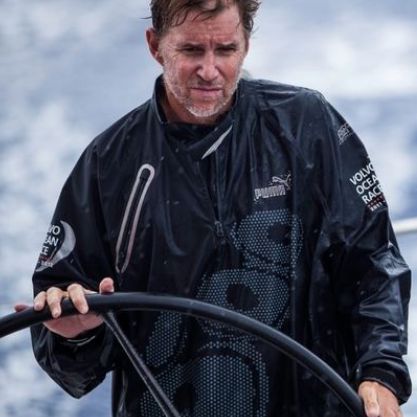
Photo: North Sails
The second time I was on a leg across the Southern Ocean, a few days before the start we knew hell awaited us all the way along New Zealand. It was one of only a few nights when we had to pull back. A few times the conditions were such that we had no control over the boat. Three boats nearly sank! Two of them sheltered on the west coast.
Groupama and we pulled back too, and because of that move we later became the first two to round Cape Horn, after it had been blowing over 40 knots for ten days.
Those were the conditions in which we were sailing on the second reef with the staysail as the fourth sail and a fractional Code 0. Unfortunately, we didn’t have a J1 as a furling headsail.
I think what made it dangerous for those boats was the all-or-nothing approach. When you have the fractional zero up and a J4, and you’re in conditions where a brutal squall suddenly hits for a few minutes and then eases just as quickly, you furl the fractional zero and you’re still sailing at 25 knots with only the second reef and the J4 while surfing down massive waves.
For us, Casey Smith was one of the key guys - he injured his back four hours after the start of the leg. Jono Swain had an elbow the size of a grapefruit - I forgot what he hit it on… one of our helmsmen dislocated his shoulder… basically, we were down two helmsmen.
On a VOR 70 the crew numbered 10 sailors, with me and the navigator sharing shifts. In a way I was the second navigator, and on deck there were two teams of four - one team always outside while the other rested.
After those injuries we had to change everything: the teams had three members each, and the three of us helmsmen kept rotating constantly.
The Southern Ocean is a place where you have to stay alert all the time, and where you feel incredibly lonely… you never see a boat, another yacht, nothing! You feel alone!
And rounding Cape Horn is the best feeling I’ve ever had as a sailor. That’s when you become a believer :) and even though you know you still have ten days of sailing ahead, it feels like it’s nothing.
What does it take to be a Volvo sailor?
There are ten people on board, and each of them is a specialist in several things. That’s another thing I mention to kids… if you want to be a top-class sailor, you also have to be a rigger, a sailmaker, a boat builder, an electrician…
For example, we lost the watermaker five days after the start, so Casey Smith and Mickey Muller converted a bilge pump into a watermaker! You have to be capable of doing things like that — that’s the kind of sailor profile we need.
Nowadays, in the era of the “flying” generations, you need an exceptional amount of technical knowledge — hydrodynamics, aerodynamics — you need to get educated, study, and learn something that will make you stand out. The best example of that kind of specialization is an electronics technician/electrician.
You can’t just be a good navigator, sail trimmer, or helmsman… because there are thousands of excellent navigators, trimmers, and helmsmen. You have to bring something more. And that’s what it takes to be part of a Volvo crew.
On top of that, they have to be able to fall asleep when they’re off watch — and when something happens, they must be ready to go without sleep for several days.
No one complains about those conditions, and that’s the beauty of a Volvo crew: no matter how hard it is, no one complains! It’s true, that’s what we signed up for — but in a way, that’s life, and you have to go through it.
How much spare equipment do you carry?
Most of the problems are boat-related problems… bulkheads cracking, a crack here and there - most often when we drop off a wave in some strange way.
We had the most of those issues on the first boat. We repaired bulkheads in every part of the world. It’s carbon, so you need to stay in contact with the engineers, who tell you how many layers are needed in which spot… We carried all those components with us - pieces of fabric, epoxy - and we had to be ready to make whatever was necessary out of that. We had to approach many things in an innovative way.
The actual toolbox was a standard size, a small suitcase, but we also had other kits… for hull repairs, for patching sails… We didn’t have sewing machines, but after damage on a sail, it would be back up on the mast the next day.
These are some unreal situations, and that’s where friendship and relationships on board really come to the fore. Some are below deck trying to fix the problem, while others are outside trying to get the maximum out of the boat’s current condition.
How did you get into radio-controlled sailing?
My first contact with RC sailing was during Covid. My America’s Cup career shifted into TV commentary. I did that in San Francisco, in Bermuda, and I was invited back to New Zealand during Covid.
Almost no one from outside New Zealand was allowed to enter the country. My fiancée at the time—now my wife (we got married in New Zealand)—we travelled there while the whole world was locked down, and in New Zealand the America’s Cup was being sailed freely. We basically “skipped” three quarters of Covid, and I think we were very lucky because of that. When we got back home to Newport, the situation in the world began to normalize, and my brother Brad calls me and says: “We’ve started sailing the DF95 class. It’s a small radio-controlled sailboat. We all gather on the dock and race.”
My first reaction was—this sounds so stupid, you guys are crazy :)
He answered that I was definitely going to like it.
Soon we returned from New Zealand. I walked into my house and on the dining room table there was a brand new DF95, fully equipped. It even had stickers of my favorite hockey team—the Boston Bruins—and the number 4 on the sails, which was the number worn by Bobby Orr, my favorite hockey player of all time. The controller was right next to it… and alongside all that there was a note: “You owe me $500” :)
The following week I went down to the Sailing Newport dock. There were already 20 people there freezing—the middle of winter, literally—racing these crazy little boats.
In the first race a real miracle happened: I finished second or third! The rest of the day I was a complete disaster… but the feeling was that it was top-level fun.
I love constantly experimenting… adding twist to the sail, reducing it, pulling the boom in more, trimming along the vang… and it’s so simple to do that with the DF95.
Very quickly we got into a rhythm of sailing for an hour and a half every Saturday and Sunday morning. We’d start exactly at 9 and finish at 10:30. We’d be back home in time for everything else. We did this all through winter because that’s when we don’t have seaweed floating on the surface that can interfere with these little boats.
So the DF95 became a ritual. Every time we had between 12 and 20 boats on the water.
As time went on, we became very good at it. My brother and I started winning quite a lot in our little group, and then he went to the DF95 national championship. I couldn’t go because I had to attend another regatta.
That trip was important for us because no one from Newport had ever been to a regatta outside Newport, and nobody from outside had come to us either. I’m not sure whether Brad finished third or fourth, but when he returned his comment was: “We’re good— we’re close to the best!”
We continued working seriously with the DF95 and we truly became good. All the best sailors from the U.S. came to our place last year for the regional championship, and Brad and I finished first and second — or first and third.
After that, a guy from Connecticut called me. They were hosting a regional event in the IOM class. He told me he had a new BritPOP and that he’d be happy to lend it to me for that regatta.
My first reaction was that I didn’t have time for it, that the class looked complicated, but his response was that once I tried it, there would be no going back. And that’s exactly what happened.
IOM is a completely different level — an absolute joy!
After that I got in touch with Zvonko Jelačić, who provided me with the K2 (Kantun 2, editor’s note) for the North American Championship in Florida.
I talked to my wife and asked her what I should do, and her answer was: “Hell yeah, you should do it!” :)
Zvonko sent me the K2 two months before the regatta so I could get familiar with the boat and prepare, and then we met up with the others in Florida for the regatta. Ian Vickers was there too, and Bruce Farr - my hero…

Photo: Jackeline Brignoni De Miller (from left: Josip Marasović, Bruce Farr, Ken Read, Zvonko Jelačić)
Zvonko won that time, Ian was second, and I finished third - very close to second place, but I was the best-placed North American. And that result confirmed that I want to stay in that class!
I have to admit I truly enjoy working with Zvonko. We’ve become friends as well. I love his engineering skills. And now, with his VISS, both Bruce Farr and I are sailing!
You sail maxis - what does a small boat give you that a big boat doesn’t?
I’ve told Zvonko for years: DF95 and IOM make you a better sailor. They forced me to start reading the water the way I did in dinghies.
On big boats you’re surrounded by scale, power, drama, loads, large crews - so many elements. It’s easy to forget you’re even racing sometimes.
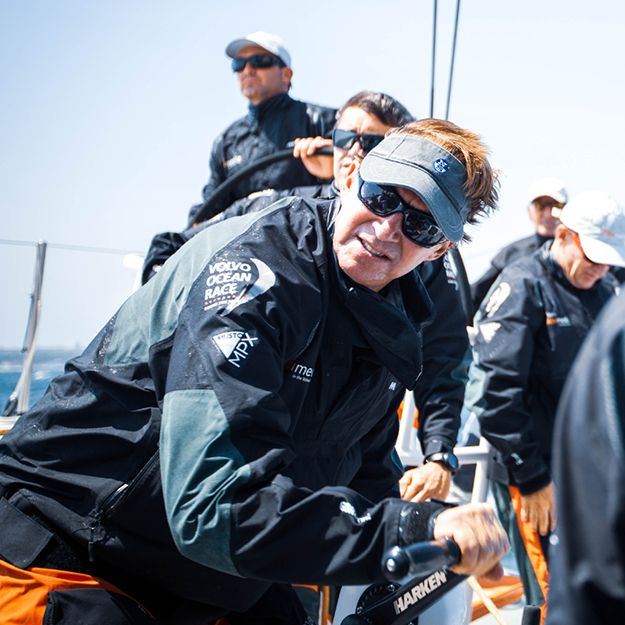
Foto: North Sails
Since RC sailing, I find myself studying the surface far more carefully even on maxi regattas. No doubt: RC sailing is making me better.
As President of North Sails, how much time do you still have to sail the way you want?
For me, the job and sailing are inseparable. My sailing career and my North Sails career grew together. In North Sails you don’t build a career without being a good sailor—and in my case, I wouldn’t have become the sailor I became without the North Sails path.
I was never a “pure pro” who had to sail next week to feed the family. I always had a job.
The model where sailors charge $500 or $1,000 per day to race is relatively new. I grew up in a different era, where my North Sails career and my sailing career were two sides of the same thing - and I wouldn’t trade that for anything.
North Sails Technology Group is now a group of many brands. What’s the goal?
Honestly? It’s not easy right now. The goal is to keep the brands distinct and run them as separate companies. Each has its own DNA, leadership, and culture. If we start reshaping their cultures, it would be a disaster.
At the same time, there are real back-end synergies - supply chain, accounting, manufacturing - that should make the whole group stronger.
It’s an interesting path, and we have to make sure each company continues in the direction that made it successful in the first place. If any one brand loses its way, that’s on all of us.
The future of sailing: foilers or classic boats?
Classic boats will always be there. Foiling is a specialized art.
Admiral’s Cup is the perfect example of what classic sailing can be: not made for TV, not made for marketing—just countries racing hard against each other like the old days. People will always love that.
But it’s also naïve to think today’s kids won’t get addicted to foiling. When you lift and fly above the water at those speeds, it’s pure joy.
Šime Fantela sailed the Moth Worlds recently, and the smile on his face said everything. He’s an Olympic gold medalist; you’d expect him to hate 25th place. Instead, he said: “Man, it was so fun - I have to tell you about it!”
Sailing has changed more in the last 20 years than almost any sport. F1 cars from 2000 and 2025 still look broadly similar. But compare America’s Cup boats then and now—or a Sunfish and Optimist versus a foiling Moth - this is only the beginning.
Our job as the older generation is simple: make sure kids are safe when they go out. Because once they try it and succeed, they’re hooked. And that’s good for sailing.
What’s next for you?
I’m really happy with the current maxi program - the 100-footer “V.” The owner, the crew, the leadership - it’s an old-school program in the best sense, driven by science and technology. The whole North Sails Technology Group is involved - sails, rigging, the full aero/hydro package - and it makes me feel young again.
I’ll keep doing that until they kick me out. There’s also Chicago - Mackinac on a TP52, and plenty of other racing - part of my job is sailing with our best clients, and I’ll do that as long as I can.
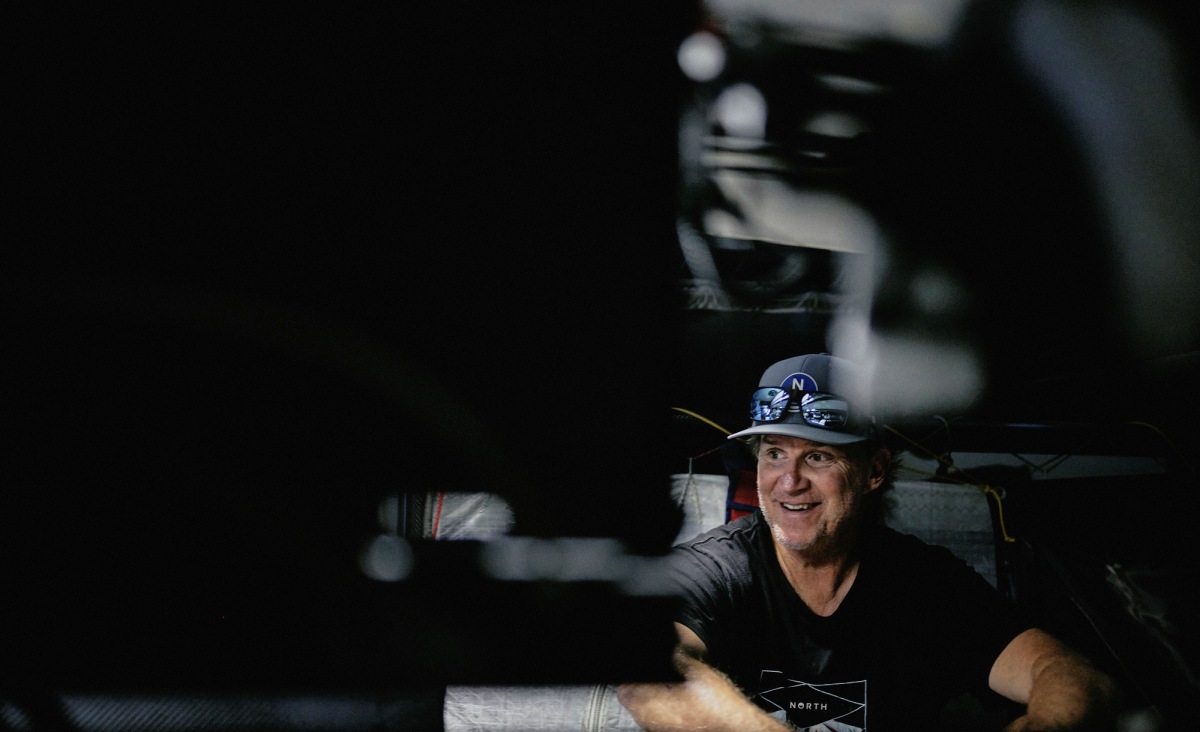
Foto: North Sails
Favorite regatta and one you still want to do?
I’d love to beat Zvonko at the IOM World Championship :)
I’d also love to spend more time in France - we have a strong operation there. IMOCA doesn’t interest me; I don’t think those boats are built for good sailing. But 100-foot trimarans are insane.
I had a chance to race with Banque Populaire’s group recently but couldn’t make the timing work, and I really regret it. Those boats look completely under control - but I can’t imagine what it’s like to be mid-ocean averaging 35 knots a day.
Ideal breeze?
I’m in the 17-knot club. Seventeen to eighteen is the top end for a J3 - serious sailing. In J24 and Etchells, we always felt we had an edge when it was windy - those are planing conditions.
Upwind or downwind?
Upwind. In Etchells or TP52, upwind is my favorite and I think I’m more of an upwind sailor. Downwind on a Volvo is perfect - but I still prefer upwind.
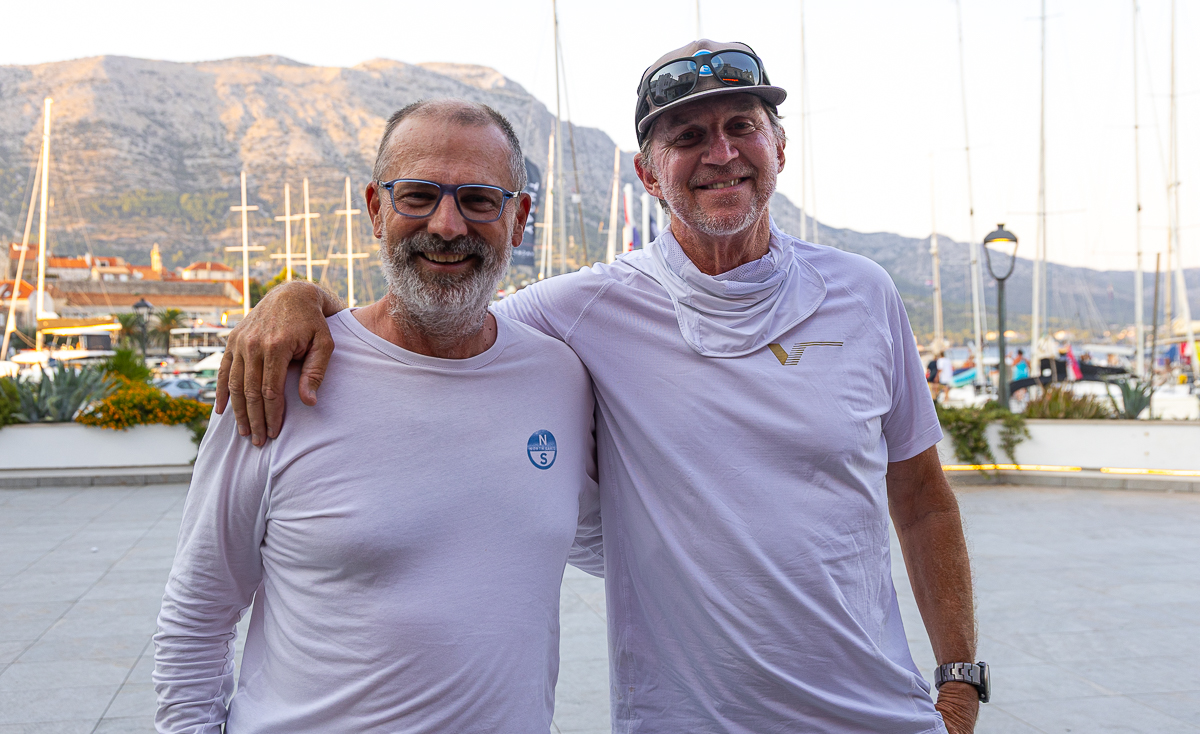
This interview was made possible thanks to a mutual friend, Stjepan Marinović, who leads North Sails in Croatia.
Cover photo: North Sails